
Rebel Talks:
A Conversation with Anna Glass
By Grace Okereke
In collaboration with International Arts Manager Magazine and Black Art and Design.
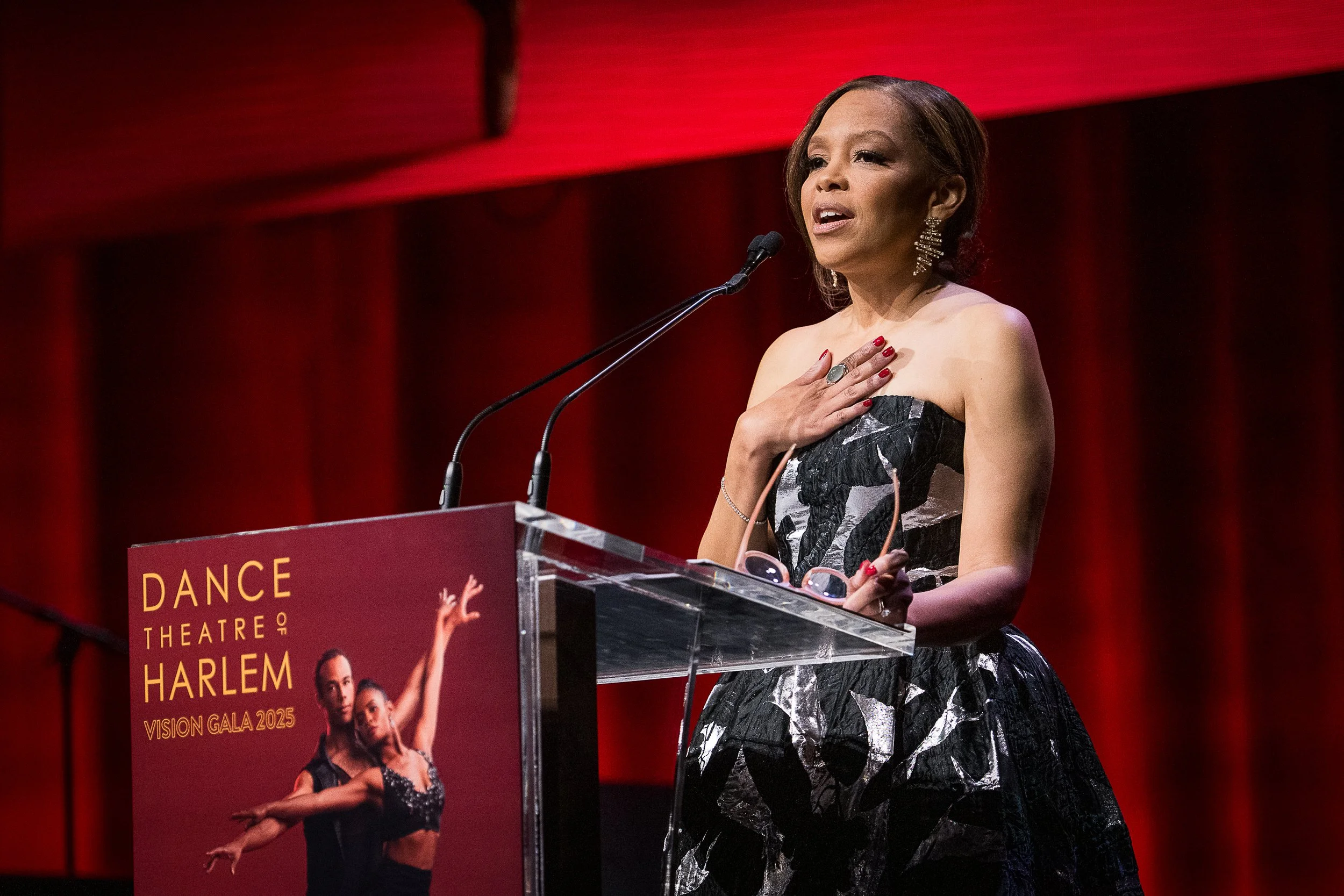
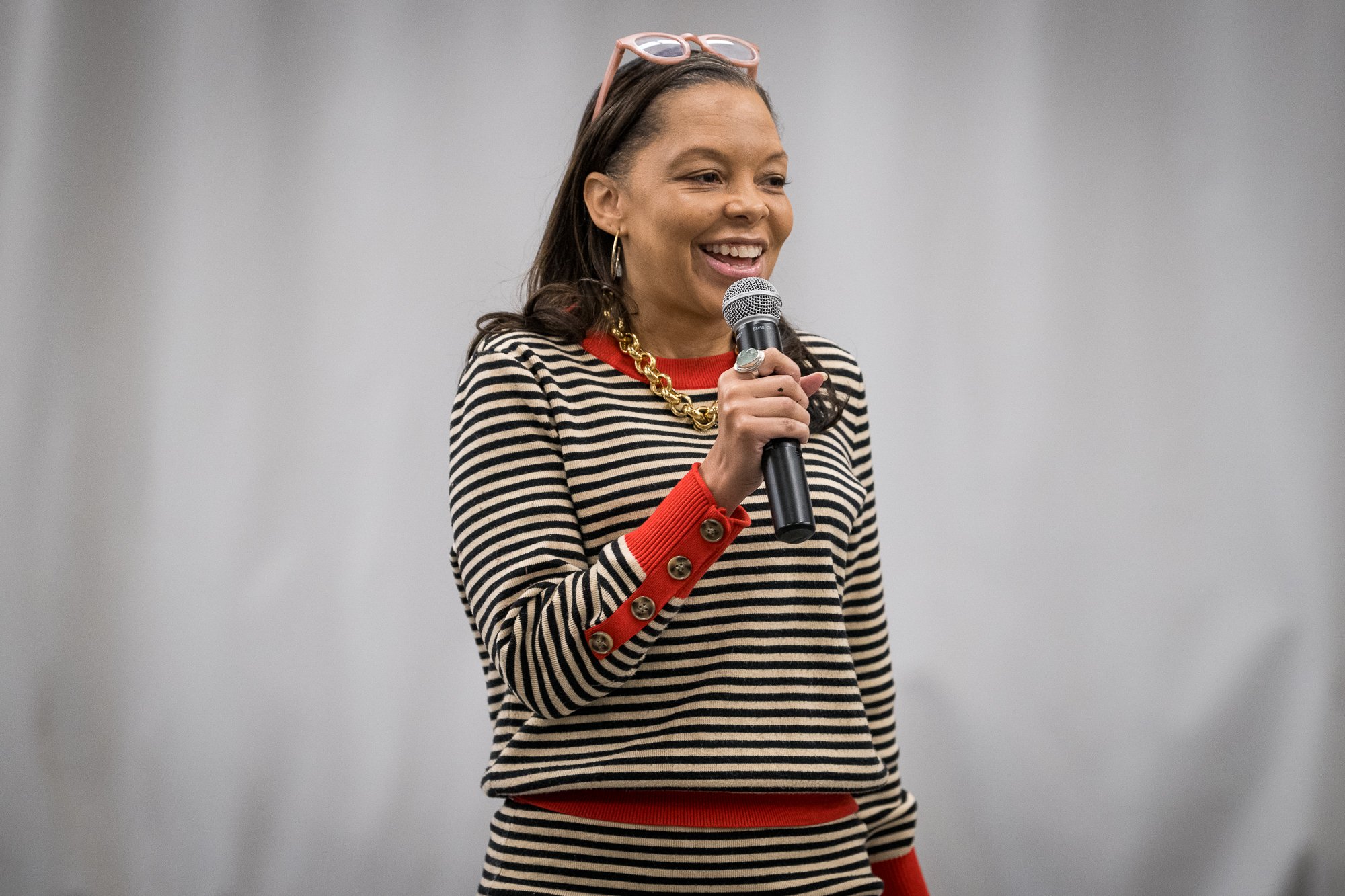
I do not believe that I am being hyperbolic when I say we are at a point in time when it feels challenging for many, if not most of us. Political agendas are shaping decisions that are negatively affecting the performing arts sector, leaving a heavy weight of uncertainty in the air. So, when I sat down for a 1:1 talk with Dance Theatre of Harlem’s, Anna Glass, I was inspired by the company’s journey and her decades long tenure as Executive Director. In a candid conversation, she opens up about how she navigates crises, the realities of sustaining work at scale, institutional responsibility, leading under pressure and building for the long term.
Who is Anna Glass? Tell Us about yourself in your own words
I’m a cultural producer. I have always been someone who has been drawn to making things happen, as well as amplifying Black stories. I am a mom, which is also important to me. I have a 13-year-old daughter who is also a dancer. I was a dancer 100 million years ago, and it is how I became introduced into this work. I’m a wife, which is also important. I bring all of myself to everything I do. And I find that in my work, especially working with Dance Theatre of Harlem and the artists that I work with, the students that I have in the school, being all of these things is helpful in my perspective in doing my work.
You are originally from Detroit. Detroit’s Black cultural legacy runs deep, from activism to the arts. How did the city shape how you see Black culture?
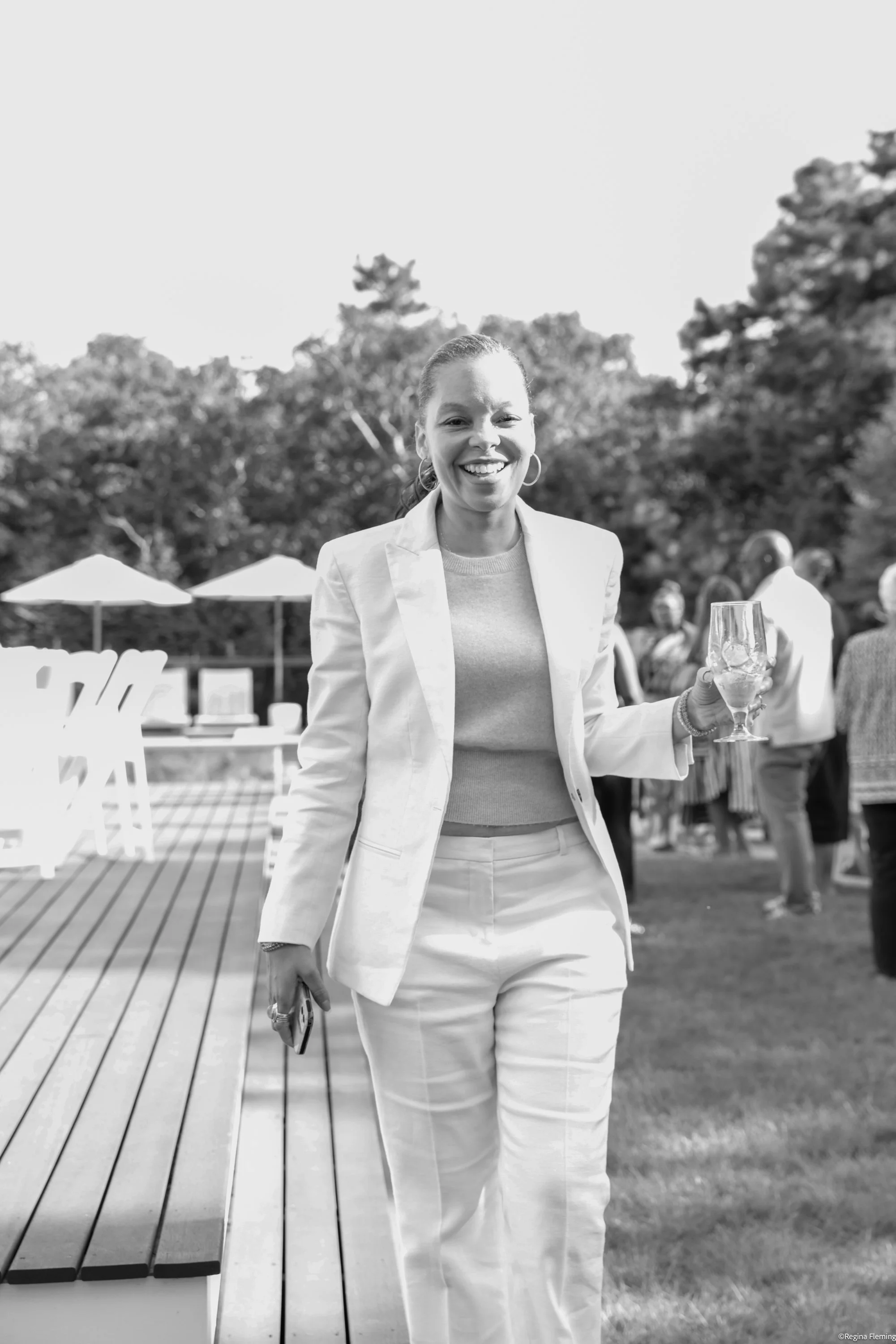
So, I am actually from a small town called Saginaw, Michigan. I also grew up in Detroit. But I bring both up because Saginaw is very small, and Detroit is probably one of the most famous cities in, certainly, in the United States – if not globally – for its cultural impact and the automotive industry.
In Saginaw, I didn’t have a lot of art. I don’t think I ever saw a dance company come through there. But every year there was the Ebony Fashion Fair that would come through. That was my exposure to Black culture with a capital “B” – fashion, glamour, beauty, community.
So I learned very early on that Black culture isn’t just about seeing a show; it’s about seeing a people. It’s about a community coming together around something that reflects who they are. That experience stayed with me as I moved to Detroit and then into the broader field – that Black art and culture are about being seen, seeing one another, and lifting each other up.
You trained as a lawyer but chose the arts. What was the moment you knew your heart / spirit belonged in dance—and what part of your legal mindset helps you lead?
So my heart and soul belong to dance. When I was five, I started dancing. That was my outlet. My parents – my mother in particular – felt very strongly that all of her children needed to be exposed to the arts. I kept dancing, and eventually I found myself in law school. I was still dancing, but I was in an employment law class and I remember thinking, this is not where my heart is. The work we were talking about didn’t reflect who I was or the values that I hold. I knew I needed to be closer to the art, not in a courtroom.
My legal training has been invaluable, though. It has shaped how I think, how I analyse situations, how I write and construct arguments. It means I can read a contract and understand what is being said, and I can communicate with attorneys in a way that’s effective. It has also impacted my trajectory as a Black woman in arts management. Often it’s difficult for Black women to move into leadership roles – we get stuck at entry level. Having a law degree made it harder for people to keep me there. It gave me a kind of credibility that allowed me to move through the industry differently.
I often encourage young arts administrators who are interested in leadership to consider law school or an MBA, if that’s something they want. I think bringing in tools and perspectives from other sectors can only make our field stronger. Having other lenses helps you question that and think more expansively about what we can be.
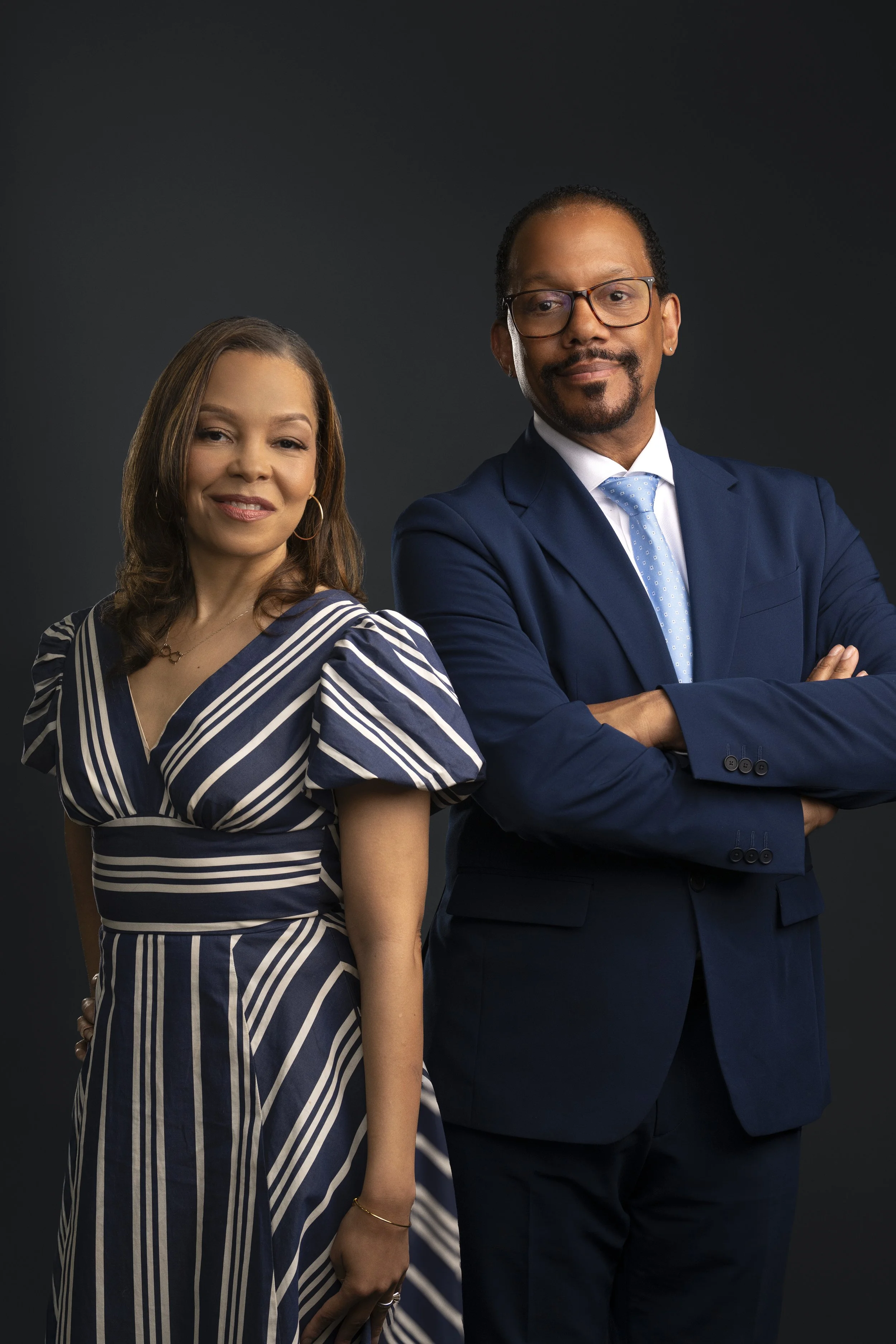
Dance Theatre of Harlem is in its 57th year. In the 10 years you have served as Chief Executive Officer you have managed to overcome obstacles that many companies could only dream of weathering. How have you endured and where do you feel the company is now?
I have not done all of this alone. I believe deeply in learning from others. I also believe deeply that it is not about me being the smartest person in the room – it’s about surrounding myself with people who are smart, who are thoughtful, who can help us problem-solve together.
When I came to Dance Theatre of Harlem, the organization was in a very challenged financial position. That is not uncommon for institutions led by and serving Black communities; we are often under-resourced and under-capitalised. What we chose to do was to look at those challenges as opportunities – opportunities to shift, to respond, to be flexible, to think differently. Instead of saying, “This is how it’s always been done,” we asked, “What is possible?” That has helped us build a kind of resilience into the DNA of the organization. We’re at a very interesting inflection point now. We’re strong, we’re visible, and we’re still deeply committed to creating pathways for Black artists and administrators. We’re still committed to leading the field in ways that perhaps it hasn’t seen before. And we’re not finished. We’re still writing the script for what this looks like – what a Black ballet company in the 21st century can be, and how we can model something that is sustainable, excellent, and rooted in community.
What would you say to the current generation of artists trying to make successful careers right now?
I would say, be curious. I would say, be bold – although I have to say, this generation is far more bold than my generation, and I really, truly appreciate that. Where I think there could be more is in curiosity about what has come before. Not in a nostalgic way, but in a practical way. It’s like a Rubik’s Cube or a puzzle: you look at what was done before you, you ask what worked and what didn’t, and then you rework it with your own voice and your own perspective.
Sometimes I hear ideas presented as if they are brand new, and I think, actually, that’s an idea that has already been tried. There is so much to be learned and adapted if you are willing to look backwards a bit, study it, and then push it forward in a new way. So: keep the boldness, but pair it with deep curiosity.
What impact, or lasting impressions, do you hope the company has on the places it performs in?
Dance Theatre of Harlem was founded by Arthur Mitchell. His intention, one, was that he was creating the organization in response to the assassination of Dr. King. It was his way of saying, “I’m going to manifest the dream” – by giving the gift of ballet to the people of Harlem, particularly to young people. He wanted to build citizens, not just dancers. Young people who had self-confidence, discipline, perseverance – who could take those things into whatever profession they chose.
The other part of it was that he believed this art form, which has historically been elitist and exclusionary, could be something that brought people together. That is still what we see when we tour. Not just in places that have large Black communities – though those are important – but in places like Omaha, Nebraska, or Denver, Colorado, where you see people from all backgrounds in the audience. When we perform a ballet like Return – set to James Brown and Aretha Franklin – and you see the audience, this very diverse audience, bopping their heads and moving in their seats, it is such a joyful thing.
What I hope people experience when they see us is a sense of community, a sense of shared joy, a sense of possibility. And I hope our artists are reminded that they are part of something bigger than themselves – that they carry that legacy and that community with them.
Amid today’s culture-war debates—funding cuts, DEI pushback, shifting policies—how are Black performing artists being affected, and what choices are you making to protect the work?
I will say there’s a lot of trepidation right now, on both ends. There is trepidation as it relates to organizations and venues that support or present Black artists. They are trying to figure out, “What can we say? What language can we use? How do we promote this work?” There is a lot of uncertainty. At the same time, there is a lot of clarity for Black artists. There is a clarity around who we are and around not apologizing for who we are. So those two things are happening simultaneously – trepidation and clarity.
For us at Dance Theatre of Harlem, it’s very important that we operate in such a way that we are still here 50-plus years from now. That means being smart around our choices, being smart around our decisions, deciding when is the right moment to make a big statement and when it is more important to simply do the work and live the mission. We are constantly looking back at our mission and asking, “Are we living this?” Because audiences and donors can tell when you are not. And if you are not, they will respond accordingly. There’s also a question of solidarity – whether people come to support, even if it’s complicated, or whether they stay away out of fear, which can sometimes make things worse. I see both sides of that. I understand the safety concerns. But I do think this is a moment where it is even more important for us to hold hands and support one another rather than retreat.
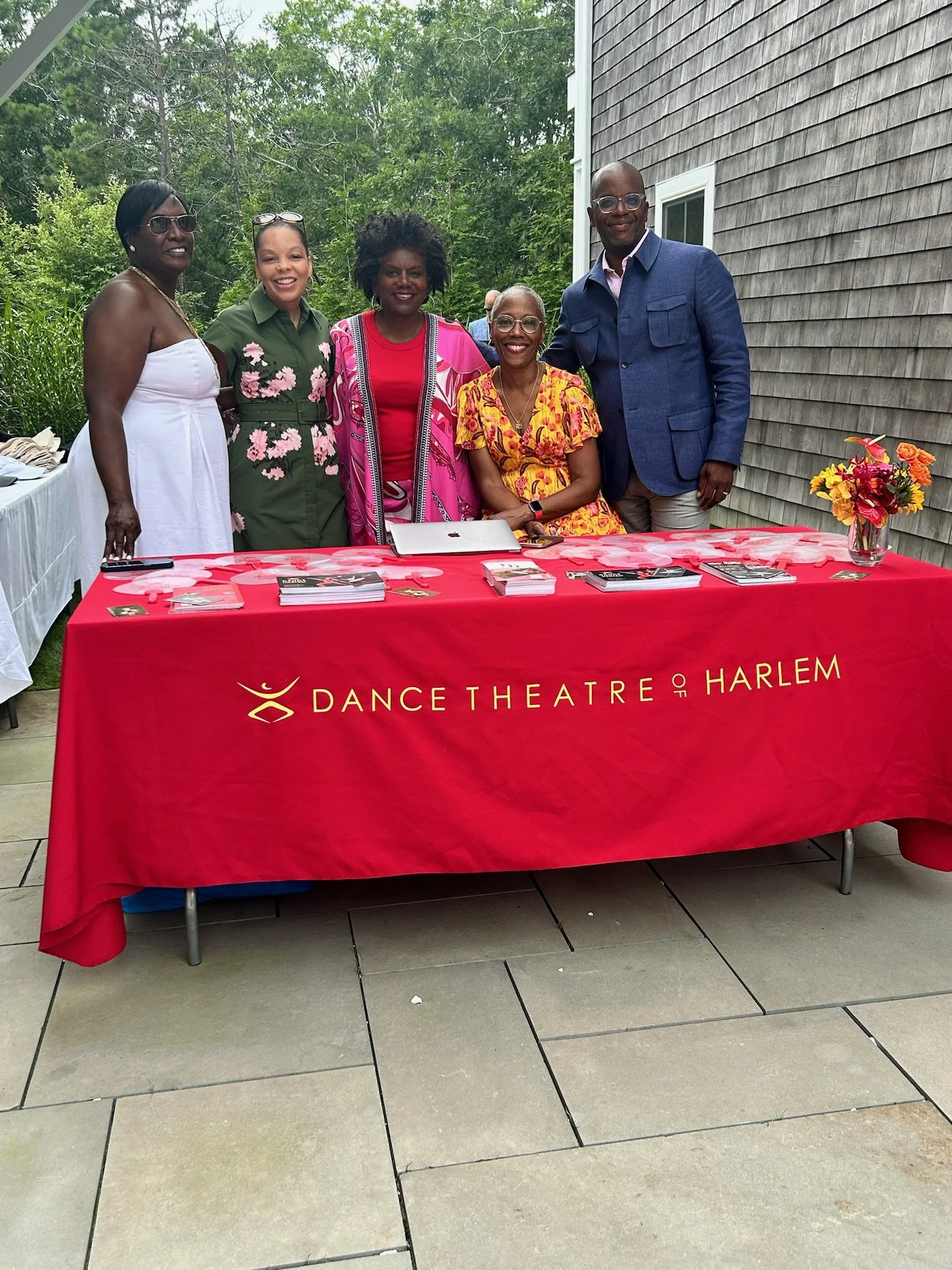
What is the achievement you are most proud of so far in your career?
You know, I’ve had a really, thus far, really quite wonderful career. I feel very fortunate. There are two things that come to mind right now. One was prior to coming to Dance Theatre of Harlem. I served as a cultural producer, and I produced the one-woman show of the legendary Carmen de Lavallade. To be able to help bring her story to the stage – not as someone’s muse or someone’s wife, but her story – gave me great joy. And as a Black woman, it was very inspiring to be a part of that.
The second is how we came through the pandemic at Dance Theatre of Harlem. We went into the pandemic with, I want to say, about $200,000 in the bank. We had no idea how we were going to survive. But we made a commitment that we were going to keep all of our dancers on payroll, even if there was no performing to be done. I entered that period in tears, honestly, but also with a very clear intention that we were not just going to survive it – we were going to thrive through this very challenging moment. We turned into a very different institution than when we entered it. We ended the pandemic with a $10 million gift, and we emerged stronger, transformed. Leading the organization, leading the team through such tumult and keeping the entire team together will always be one of my proudest moments.
What do you hope your legacy will be and how do you want to be remembered?
In a lot of ways I still feel like my work is just beginning. So it’s a little bit hard for me to really answer that question as if it’s all done. But what I will say is that my hope is that I have done my best work and that I have positively impacted the people around me. I hope that the people that I work with, that I lead, that I support, feel that their cups have been filled – not emptied – by being in community with me or working with me. If that’s how I am remembered, that would be enough.
What’s next on the horizon for the Dance Theatre of Harlem—new works, tours, or initiatives?
Firebird is our legacy ballet that we are deeply, deeply thrilled to be bringing back. It has not been seen in a very long time, and it is such a testament to Geoffrey Holder’s vision and pageantry. We will have a pretty extensive tour. In addition to Paris, it will be in Norfolk, Virginia; it will be in New York; we have a West Coast tour; and there may be other international locations as well. So that is very exciting.
Beyond that, we have just concluded negotiations with AGMA – the American Guild of Musical Artists. I am very passionate about artists’ rights and about artists being able to live sustainable lives, particularly in a city like New York where it is very expensive to live. So for us, partnering with AGMA to work on how we can create better conditions for our artists is very much part of what’s ahead. We want to be part of creating a new landscape for artists and for unions in the arts and culture space.
To discover more about Dance Theatre of Harlem and their upcoming programme, visit: https://www.dancetheatreofharlem.org/tour/
Read on International Arts Manager Magazine: https://internationalartsmanager.com/issue-12-vol-21-2/